How to Build Better Habits Using the Science of Behavior Change
How to Build Better Habits Using the Science of Behavior Change

Every January, millions of people commit to new habits with genuine enthusiasm. By February, most have quietly abandoned them. This is not a character flaw — it is the predictable result of using the wrong approach.
Behavioral science has learned a tremendous amount over the past two decades about how habits form, what makes them stick, and why they fall apart. The findings consistently point to one conclusion: successful habit building is about systems and environment, not willpower and motivation.
How Habits Actually Work: The Habit Loop
Neuroscientist Ann Graybiel's research at MIT established the foundational model of how habits operate in the brain — a three-part loop that runs automatically once established:
- Cue (Trigger): A signal that initiates the behavior — a time, location, emotion, preceding event, or other person
- Routine (Behavior): The actual habit — physical, mental, or emotional
- Reward: The benefit the brain receives, which reinforces the loop and makes it more automatic over time
Understanding this loop is not just academic — it is the practical foundation for building any new habit deliberately. To build a habit, you engineer the cue, make the routine as frictionless as possible, and ensure the reward is immediate enough for the brain to associate it with the behavior.
The Environment Design Principle
Stanford behavioral scientist BJ Fogg's research shows that behavior is a function of three things: motivation, ability, and a prompt (trigger). Most people try to build habits by increasing motivation. But motivation is unreliable — it fluctuates with sleep, stress, mood, and circumstances.
The far more reliable approach is to design your environment so the desired behavior requires minimum motivation and maximum ease. And design it so unwanted behaviors require maximum friction.
| Goal Habit | Environment Design |
|---|---|
| Exercise in the morning | Sleep in your workout clothes; put gym shoes by the bed |
| Read before bed | Book on pillow; phone charger outside the bedroom |
| Eat healthier | Healthy food at eye level in fridge; unhealthy food out of sight or removed |
| Meditate daily | Cushion in a visible spot; meditation app on home screen |
| Drink more water | Water bottle on desk, refilled the night before |
| Spend less time on phone | Social apps in a folder, three taps away; grayscale mode on |

Habit Stacking: The Most Reliable Trigger
One of the most practical techniques in behavioral science is habit stacking — linking a new behavior to an existing established routine. The formula is simple:
- After I pour my morning coffee, I will write three things I'm grateful for.
- After I sit down at my desk, I will identify my single most important task for the day.
- After I brush my teeth at night, I will do 10 minutes of reading.
- After I walk in the door from work, I will change into workout clothes immediately.
The existing habit becomes the trigger. Because it is already automated, it reliably fires the new behavior without requiring a conscious decision each time.
The Two-Minute Rule: Start Embarrassingly Small
One of the most counterintuitive findings in habit research is that the size of the starting behavior almost does not matter — what matters is the consistency of showing up. A habit that is done every day at 10% effort is far more powerful than one done occasionally at 100%.
The two-minute rule: scale any habit down until it takes two minutes or less to do. Not "exercise for 30 minutes" — "put on workout clothes." Not "meditate for 20 minutes" — "sit on the meditation cushion and take three deep breaths." The goal is to make not doing it harder than doing it.
Never Miss Twice: The Recovery Rule
Missing a habit once has almost no measurable effect on long-term habit formation, according to research. Missing twice in a row is where patterns break down. The most important habit rule is not "never miss" — it is never miss twice.
When you miss a day, your only job is to make sure tomorrow happens. The internal narrative matters here: "I missed yesterday — I am someone who struggles with consistency" destroys habits. "I missed yesterday — I show up today regardless" preserves them.
Identity-Based Habits: The Deepest Level
The most durable behavior change does not come from outcome goals ("I want to lose 10 kg") but from identity shifts ("I am someone who exercises regularly"). Every action you take is a vote for the kind of person you believe yourself to be.
- Outcome: "I want to read more books." → Identity: "I am a reader."
- Outcome: "I want to exercise." → Identity: "I am someone who moves their body every day."
- Outcome: "I want to save more money." → Identity: "I am someone who lives below their means."
Ask not "what do I want to achieve?" but "who do I want to become?" Then ask what someone who is already that person does every day — and start doing those things.
Track Your Habits: The Power of Visual Evidence
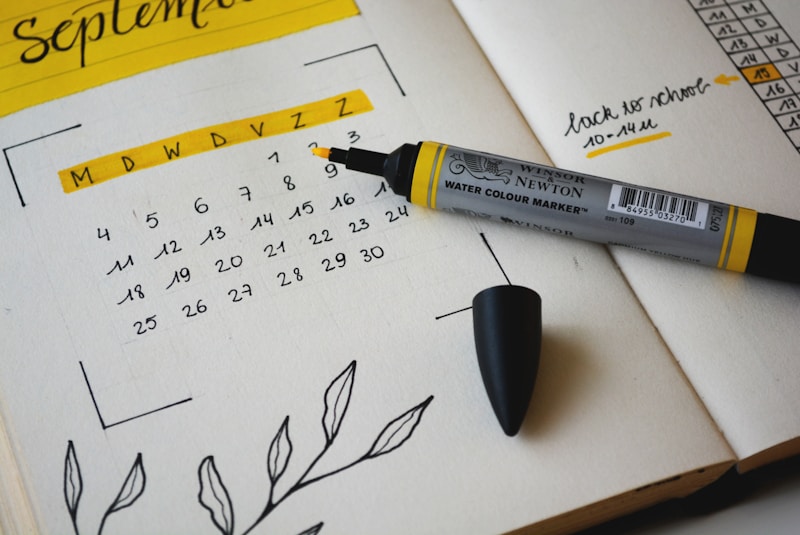
Habit tracking works for two reasons: it makes your progress visible (which is intrinsically motivating) and it creates a "don't break the chain" psychology that makes missing feel worse than doing.
Keep it simple: a paper calendar with an X through each day you complete the habit. Or a habit tracking app. The format does not matter — the visibility does. Seeing 18 consecutive Xs makes you far more likely to add a 19th than any motivational quote ever will.
Frequently Asked Questions
How long does it actually take to form a habit?
Research shows an average of 66 days, with a range of 18 to 254 days. The popular "21 days" figure is a myth with no scientific basis. Simple habits like drinking a glass of water after breakfast form faster than complex ones like a daily gym workout.
Why do my habits keep failing?
Most habits fail because they depend on motivation, which is unreliable, rather than systems and environment design, which are stable. They are also often too large, too vague, or attached to no reliable trigger. Fix those three things and success rates improve dramatically.
How many habits should I work on at once?
One at a time. Every new habit competes for the same limited cognitive resources. Build one until it is genuinely automatic — typically 60–90 days of daily practice — before adding the next.
What is the best way to break a bad habit?
Make the bad habit harder to do: increase friction, remove triggers, make the reward less immediate. Simultaneously, replace it with an incompatible behavior that satisfies the same underlying need — a behavioral substitution rather than pure suppression.
Does reward really matter for habit formation?
Yes — significantly. The brain reinforces behaviors that are followed by immediate positive feedback. For habits whose rewards are delayed (exercise, saving money), adding an immediate reward — a favorite podcast only during workouts, a small treat after saving — accelerates habit formation.


Comments
Post a Comment