Prague Travel Guide 2026: Everything You Need to Know Before You Go
Prague Travel Guide 2026: Everything You Need to Know Before You Go
Prague earns the phrase "fairy-tale city" in a way that most European destinations don't. Cobblestone streets lined with baroque buildings. A castle that has been continuously inhabited since the 9th century. A river that doubles the view. And all of it at prices that make Western Europe feel absurdly expensive by comparison. In 2026, Prague continues to deliver one of the continent's most complete travel experiences — history, food, architecture, nightlife, and day trips — without emptying your wallet.
This guide covers everything first-time and returning visitors need to know: the best things to do, when to go, how to get around, where to eat, and practical tips to make the most of your time in the "City of a Hundred Spires."
Quick Facts About Prague
| Fact | Detail |
|---|---|
| Country | Czech Republic |
| Currency | Czech Koruna (CZK) — not the Euro |
| Language | Czech (English widely spoken in tourist areas) |
| Best Time to Visit | Late May, September–October |
| Average Daily Budget | €50–70 (budget) | €100–150 (mid-range) |
| Getting There | Václav Havel Airport (PRG) — connected to all major European hubs |
| Getting Around | Metro, tram, walking — all excellent |
Why Visit Prague in 2026?
Prague remains one of Europe's most enchanting and underpriced capital cities. While overtourism strains Amsterdam, Barcelona, and Lisbon, Prague's compact center is still navigable — especially outside of summer peak season. The city offers a rare combination: UNESCO-level heritage, a thriving local arts and food scene, and a cost of living that makes it genuinely accessible for budget and mid-range travelers alike.
In 2026, Prague has also expanded its cultural calendar, with events including the Prague Spring International Music Festival (May–June) and a revitalized contemporary arts district in Holešovice that draws visitors far beyond the Old Town tourist trail.
When to Visit Prague
| Season | Weather | Crowd Level | Best For |
|---|---|---|---|
| Spring (Mar–May) | 10°C–18°C | Moderate | Cherry blossoms, music festivals, mild days |
| Summer (Jun–Aug) | 20°C–28°C | High | Beer gardens, outdoor events, long evenings |
| Autumn (Sep–Nov) | 8°C–15°C | Moderate | Wine harvests, colorful foliage, fewer crowds |
| Winter (Dec–Feb) | -2°C–5°C | High (Dec) / Low (Jan–Feb) | Christmas markets (Dec), budget travel (Jan–Feb) |
Top Things to Do in Prague
1. Prague Castle (Pražský hrad)
The largest ancient castle complex in the world, continuously inhabited since the 9th century. Inside: St. Vitus Cathedral, the Old Royal Palace, Golden Lane, and the St. George's Basilica. The Basic Tour ticket (around CZK 450 for adults as of 2026) covers the main highlights on a two-day pass. Buy tickets at the Information Centres in the Second and Third Courtyards.
2. Charles Bridge (Karlův most)
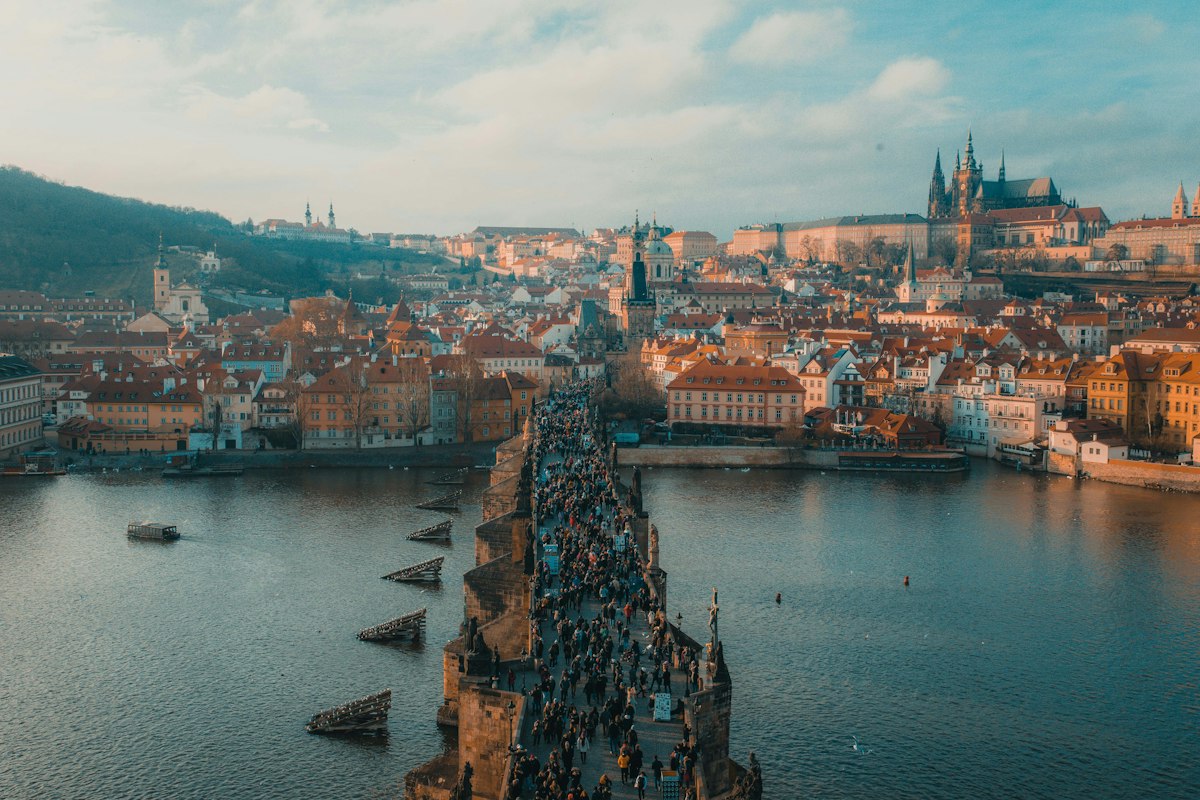
The iconic 14th-century stone bridge crossing the Vltava River, lined with 30 baroque statues of saints. Visit at dawn or dusk to avoid the midday crowds and see the bridge in its best light. It remains one of the most photographed spots in Central Europe.
3. Old Town Square (Staroměstské náměstí)
Untouched in its original form since the 10th century. Home to the famous Astronomical Clock (Orloj), which has been marking the hours since 1410. Street performers, market stalls, and Gothic church spires create a scene that feels genuinely medieval — not manufactured.
4. Vinohrady and Letná: Beyond the Tourist Center
The best Prague is the Prague that locals actually use. Vinohrady is an elegant residential neighborhood with wine bars, Czech bistros, and a pace that feels like normal city life. Letná park offers the best elevated views of the city and is home to some of Prague's finest craft beer gardens.
5. Day Trips from Prague
Prague is perfectly positioned for day trips. Kutná Hora (Sedlec Ossuary, known as the "Bone Church" — just 60 minutes by train) is one of the most unusual sites in Europe. Karlovy Vary, the elegant spa town, is two hours away. Terezín, the former WWII concentration camp, is a sobering but important historical visit just 60km from the city.
Where to Eat and Drink in Prague
Czech cuisine is heavier and more meat-forward than Mediterranean food, but deeply satisfying. Key dishes to try: svíčková (braised beef in cream sauce with bread dumplings), svíčková na smetaně, and trdelník (chimney cake — a tourist staple but genuinely good fresh). For craft beer, Prague has one of the world's finest pub cultures: try a glass of unfiltered Pilsner Urquell or a local craft beer at Letná Beer Garden.
For a more modern dining experience, the Holešovice district has emerged as Prague's most exciting food neighborhood — with Korean, Japanese, and contemporary Czech restaurants alongside independent coffee shops and design bars.
Practical Tips for Visiting Prague in 2026
- Pay in CZK, not EUR: Prague is not in the Eurozone. Dynamic currency conversion at ATMs and shops is expensive — always choose to pay in Czech Koruna.
- Use a travel card: Wise or Revolut give you close to the real exchange rate. Avoid airport currency exchanges.
- Visit big attractions early or late: Prague Castle and Charles Bridge are most crowded from 10 AM–3 PM. Go before 9 AM or after 4 PM for a completely different experience.
- Walk everywhere in the center: Old Town, Malá Strana, and the castle are all walkable. Trams cover the rest of the city efficiently and cheaply.
- Learn two words: "Prosím" (please) and "Děkuji" (thank you). Locals genuinely appreciate it.
- Book summer accommodation early: July and August fill up months in advance. September visitors have more flexibility.

Key Takeaways
- Prague is one of Europe's most beautiful and affordable capital cities in 2026.
- Best time to visit: late May or September — ideal weather, fewer crowds.
- Always pay in Czech Koruna (CZK) — Prague is not in the Eurozone.
- Prague Castle, Charles Bridge, and Old Town Square are the must-see highlights.
- Explore Vinohrady and Holešovice for local Prague beyond the tourist center.
- Day trips to Kutná Hora and Karlovy Vary are worth the extra travel time.
Frequently Asked Questions
Is Prague worth visiting in 2026?
Absolutely. Prague remains one of Europe's most beautiful and affordable capital cities. In 2026, it balances medieval architecture, a vibrant arts scene, and exceptional food and drink at prices well below Western European destinations.
When is the best time to visit Prague in 2026?
Late May and September offer the best balance of pleasant weather and manageable crowds. Summer is the busiest and hottest period. January and February are the quietest and cheapest months.
How many days do you need in Prague?
Three to four days is ideal for first-time visitors — enough for the main sights, local neighborhoods, and at least one day trip without feeling rushed.
Is Prague expensive?
Prague is significantly more affordable than Western European capitals. Budget travelers can live well for €50–70 per day. Mid-range travelers should expect €100–150 per day including accommodation, meals, and activities.
What currency does Prague use?
Prague uses the Czech Koruna (CZK), not the Euro. Always pay in CZK — dynamic currency conversion is often unfavorable. Use a no-fee travel card for the best rates. Prices vary — verify before booking.
Related Reading
📌 Prague in 5 Days: The Perfect Itinerary for First-Time Visitors
📌 How to Plan a Trip with AI in 2026: A Practical Guide
Disclaimer: Travel information including prices, entry requirements, opening hours, and transportation options is subject to change without notice. Always verify all information from official sources before making travel arrangements or purchases. Prices vary — verify before booking. The author and SourceUX are not responsible for any decisions made based on the information in this article. As of September 2026.


Comments
Post a Comment